
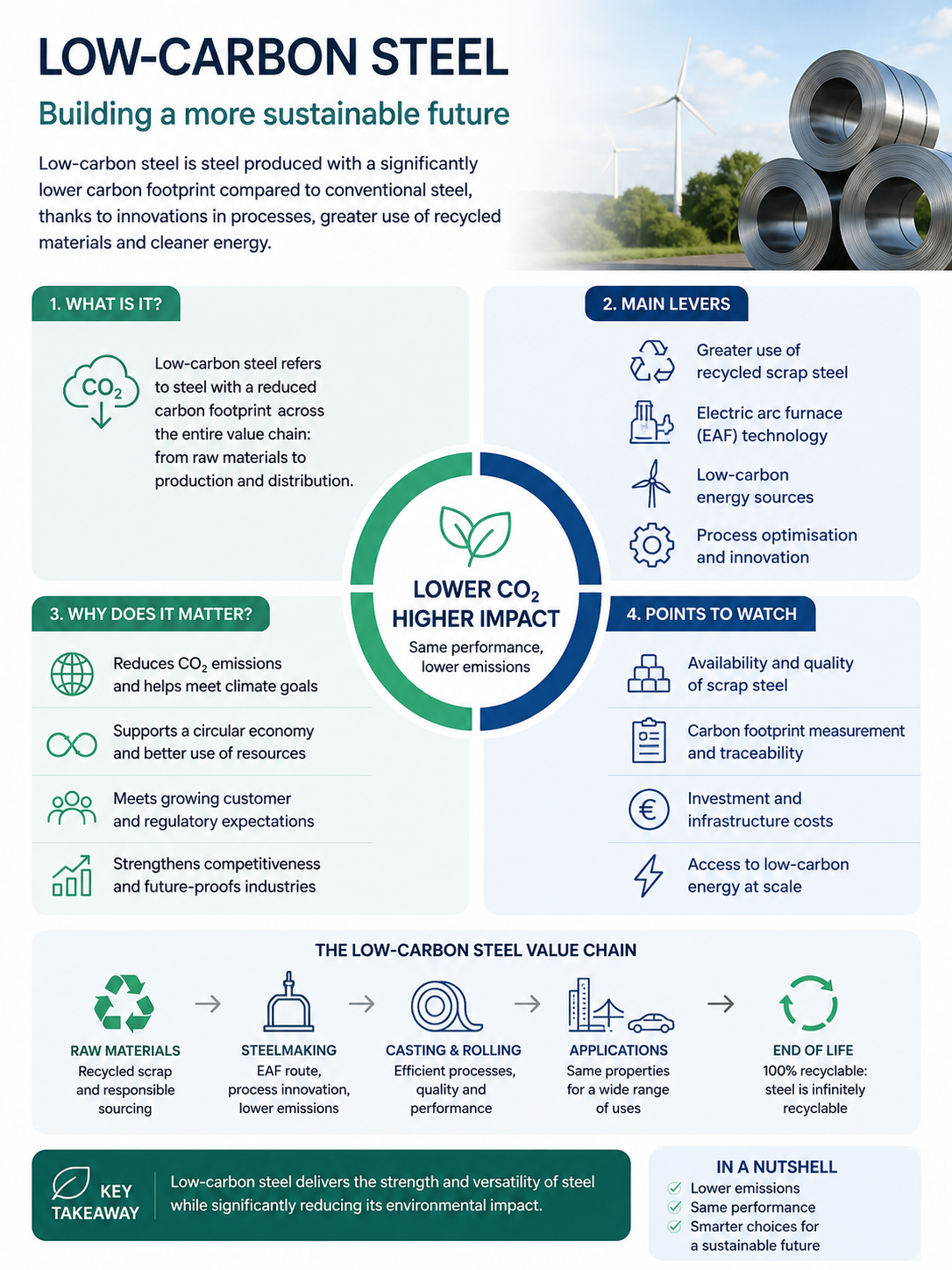
Steel industry decarbonisationDecarbonisationThe progressive reduction of greenhouse gas emissions associated with an activity, product, process or value chain. is accelerating across Europe and worldwide. With the development of recycled steel, the increasing use of renewable electricity and the emergence of direct-reduction processes for iron ore, manufacturers now have several levers available to reduce the carbon footprintCarbon footprintThe total quantity of greenhouse gas emissions directly and indirectly associated with an activity, organisation, product or service, generally expressed in CO₂e. of their supplies.
However, steel marketed as “low carbon” cannot be defined by a commercial label alone. Its environmental impactEnvironmental impactA positive or negative effect of an activity, product or decision on the environment, for example on climate, resources, water, air, soil or biodiversity. depends on numerous parameters: origin of the raw material, proportion of recycled scrap, production process, energy mix, transport and quality of traceability.
For mould and tooling manufacturers, these developments raise several practical questions:
- What is the exact composition of the steel used?
- What proportion of recycled materialRecycled materialMaterial obtained from the treatment of waste or end-of-life products and reintroduced as a raw material into a new production cycle. is incorporated into its production?
- What mechanical and thermal performance is guaranteed?
- How can traceability be ensured from the purchased material through machining to the finished mould?
- How can two grades of steel be compared using reliable environmental data?
Steel remains particularly relevant within a circular economyCircular economyA model aimed at keeping the value of products, equipment, materials and resources in use for as long as possible through durability, maintenance, repair, reuse and recycling. approach because it can be recovered, sorted and remelted. However, its end-of-life recyclabilityRecyclabilityThe ability of a product or its constituent materials to be recovered, separated and treated so that they can be reintroduced into a new production cycle; recyclability does not guarantee that actual recycling will occur. should not overshadow the importance of the initial production phase.
At Matissart, this approach leads us to consider the entire life cycle: selecting an appropriate grade, avoiding overdesign, extending the service life of the mould and, wherever possible, organising the recovery of metals at the end of their useful life.
Key takeaway
Low-carbon steel represents an important development for industry, but its relevance must be assessed on the basis of verifiable data and technical performance compatible with the intended application.