
A New Dynamic for European Industry
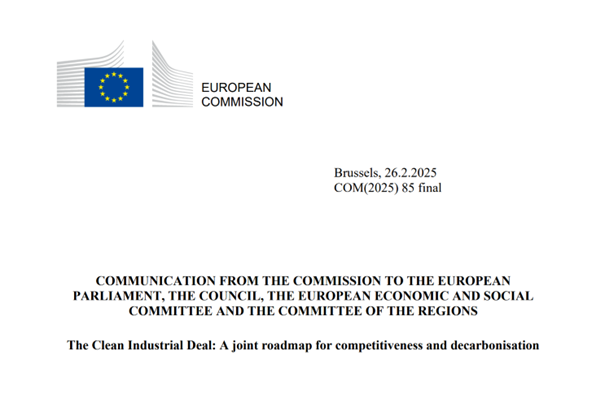
Under increasing competitive pressure from the United States and China, the European Union unveiled its Clean Industrial Deal on February 26, 2025. This ambitious pact aims to combine industrial decarbonization with economic competitiveness, seeking to reindustrialize Europe while reducing greenhouse gas emissions and ensuring a more sustainable and resilient production model.
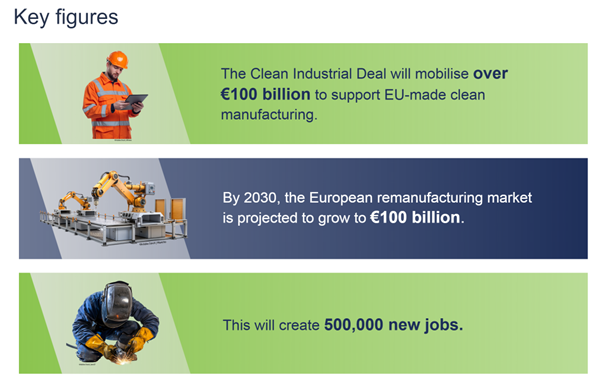
This program is designed to support energy-intensive sectors and promote clean technologies through a €100 billion financing plan and a revision of public procurement rules, favoring sustainabilitySustainabilityAn organisation’s ability to operate over the long term while balancing economic performance, environmental protection, social considerations and sound governance. Sustainability describes the long-term outcome sought; CSR refers to the management approach through which a company organises its contribution to that outcome. and European-based production.
Ambitious Goals: Innovation and Competitiveness
The Clean Industrial Deal is built on several key pillars:
- Affordable Energy: Reducing reliance on imported fossil fuels and promoting renewable energy deployment.
- Massive Funding: Creating an Industrial Decarbonization Bank and streamlining state aid access.
- Enhanced Circular EconomyCircular economyA model aimed at keeping the value of products, equipment, materials and resources in use for as long as possible through durability, maintenance, repair, reuse and recycling.: Implementing a low-carbon label and incentives for recycling and reusing raw materials.
- Regulatory Overhaul: Reducing bureaucratic hurdles to foster technological innovation.
Concerns About Implementation
While the plan presents ambitious objectives, several concerns arise:
- Unclear Financing: The €100 billion announced covers only a fraction of industry needs.
- Lack of Strict Conditions on Aid: Critics worry that subsidies might not come with strong requirements for job retention or environmental performance.
- Potential Regulatory Loopholes: Some “simplifications” could weaken existing environmental and social standards.
Implications for Matissart
As a metallurgy industry player, Matissart is directly impacted by this pact. The company can:
- Benefit from new funding for modernizing its processes and reducing its carbon footprintCarbon footprintThe total quantity of greenhouse gas emissions directly and indirectly associated with an activity, organisation, product or service, generally expressed in CO₂e..
- Access new business opportunities with the introduction of a low-carbon label and revised public procurement criteria.
- Anticipate regulatory changes and integrate greener technologies into its manufacturing processes.
The Clean Industrial Deal presents strategic opportunities but also challenges in execution. Matissart must closely monitor its rollout to maximize benefits while mitigating potential regulatory risks.