
Extending equipment service life before recovering materials
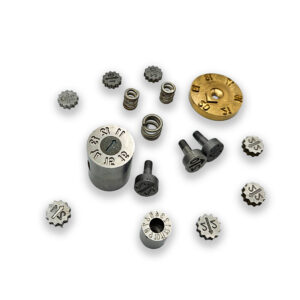
An extrusion blow mould is a durable piece of industrial equipment, made predominantly from metallic materials, mainly aluminium and steel, with copper or copper alloys used in certain technically demanding areas.
For MATISSART, however, recyclabilityRecyclabilityThe ability of a product or its constituent materials to be recovered, separated and treated so that they can be reintroduced into a new production cycle; recyclability does not guarantee that actual recycling will occur. must be considered at the end of the mould’s service life. As long as the mould can fulfil its function, the priority is to extend its service life through repairability, maintenance and adaptation.
When it genuinely reaches end of life, the priority changes: the aim is no longer to preserve its function, but to preserve the value of its constituent materials by directing them to appropriate recovery routes.
From a recyclable product to the recovery of its materials
Recyclability refers to the ability of a product or its constituent materials to be recovered, separated and processed so that they can be reintroduced into a new production cycle.
It therefore depends both on the nature of the materials and the ability to identify and separate them, as well as on the availability of suitable processes and recovery routes.
Recyclable does not automatically mean recycled
A recyclable material is not necessarily recycled: recyclability describes a possibility; recycling is its actual implementation. This distinction is essential.
A material may have properties that make it recyclable, but whether it is actually recycled depends in particular on:
- Its identification;
- Dismantling and separation;
- The quality of sorting;
- The absence or treatment of contaminants;
- The availability of an appropriate recovery route;
- The technical and economic conditions for accepting and processing it.
This is why MATISSART distinguishes material recyclability from actual recyclingActual recyclingThe actual recycling of a material at end of life after collection, identification, sorting, preparation and treatment in an appropriate recycling stream. at end of life.
From end of life to new metallic raw material
Recovery involves a series of operations carried out by appropriate specialist operators:
END-OF-LIFE MOULD
Separating ancillary equipment and components
-
Dismantling
Separating ancillary equipment and components
-
Identification
Identifying metals and the different alloy grades
-
Preparation
Degreasing and removing items that require specific treatment
-
Sorting
Separating ferrous metals, non-ferrous metals and specific alloys
-
Routing to appropriate recovery streams
Steel • Aluminium • Copper • Copper alloys
-
Processing
Treating and remelting the recovered metallic materials
- NEW METALLIC RAW MATERIAL
Recyclability therefore depends both on the properties of the materials and on the availability of recovery routes capable of identifying, separating, treating and recovering them.