
A clear direction for our commitments
Following an initial structuring phase launched in 2023, MATISSART is entering a new stage with its 2026-2030 CSR strategy.
It supports our mission: Tailored extrusion blow moulding solutions designed to increase your production throughput, optimise your resource consumption and sustain your performance over time.
Our strategy translates this mission into environmental, social and ethical commitments tailored to the challenges of a manufacturing SME.
It is structured around six pillars, aligned with the United Nations Sustainable Development Goals (SDGs)Sustainable Development Goals (SDGs)The 17 goals adopted by the United Nations to guide global action to 2030 on economic, social and environmental issues.:
Reduce our carbon footprintCarbon footprintThe total quantity of greenhouse gas emissions directly and indirectly associated with an activity, organisation, product or service, generally expressed in CO₂e. and progressively improve our energy performanceEnergy performanceA measurable result relating to the use and consumption of energy by a building, piece of equipment, process or organisation..
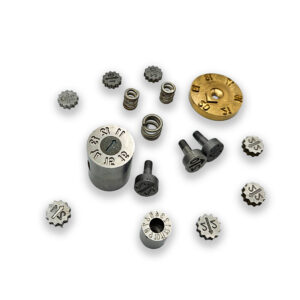
Extend mould service life through maintenance, repair, refurbishmentRefurbishmentAn operation aimed at restoring, improving or adapting existing equipment in order to extend its useful life and, where relevant, avoid premature replacement. and adaptation.
Progressively incorporate environmental, social and ethical issues into our supplier relationships.
Develop skills, support the transfer of know-how and foster career development.
Prevent occupational risks and deliver lasting improvements in working conditions.
Structure our commitments, measure our results and increase the transparency of our approach.
The 2026-2030 strategy takes shape in an environment of growing sustainabilitySustainabilityAn organisation’s ability to operate over the long term while balancing economic performance, environmental protection, social considerations and sound governance. Sustainability describes the long-term outcome sought; CSR refers to the management approach through which a company organises its contribution to that outcome. expectations, whether from customers, contracting companies, employees, partners or developments in European regulations.
Our approach is to anticipate these changes in a way that is proportionate to our activity and size, while prioritising objectives on which MATISSART can take tangible action.
Each pillar is therefore linked to indicators that enable progress to be monitored over time.
Measuring to make progress
| Pillar | Indicator | Frequency |
|---|---|---|
| Climate & energy | Relative reduction in GHG emissions | Annual |
| Climate & energy | Total energy consumption | Annual |
| Circular economy | Number of moulds refurbished or maintained | Annual |
| Circular economy | Extension of mould service life | Annual |
| Sustainable procurement | Assessment of strategic suppliers | Annual |
| Human resources | Employee training rate | Annual |
| Health & safety | Accident frequency rate | Annual |
| Governance | EcoVadisEcoVadisA platform for assessing corporate CSR performance. Its assessment notably covers four themes: environment, labour & human rights, ethics, and sustainable procurement. It assigns a score and may award a medal depending on the result. score | Every two years |
| Governance | VS ESRS report | Annual |
CSR performanceCSR performanceThe level of results achieved by an organisation in implementing and monitoring its environmental, social, ethical and governance commitments. does not rely solely on the existence of policies or commitments. It requires the ability to measure results, identify gaps and define further actions.
Our approach is therefore organised around a continuous improvementContinuous improvementA management principle based on measuring results, identifying gaps, implementing corrective or improvement actions, and regularly reassessing practices. cycle:
Define our priorities and objectives.
Implement actions suited to our operations.
Monitor straightforward, verifiable indicators.
Analyse our results and areas for improvement.
Develop our practices and set new objectives.
Sustainable performance across the business
Sustainable performance across the business
Our CSR approach is closely linked to our understanding of industrial performance: extending service life, optimising, passing on know-how and making progress.
From reducing our carbon footprint to extending mould service life, and from risk prevention to skills development, our 2026-2030 strategy aims to progressively embed sustainability in our decisions and everyday practices.
Measuring our progress today to build our performance tomorrow.
A summary of our CSR strategy and action plan is available upon request.